Why I Built Academic Scheduler — And Why You Should Switch From the Mess You're Using Now
After 1+ years of building, here's why every other academic scheduling tool frustrated founder Muhammad Huzaifa, and what he built instead. Try free for 14 days
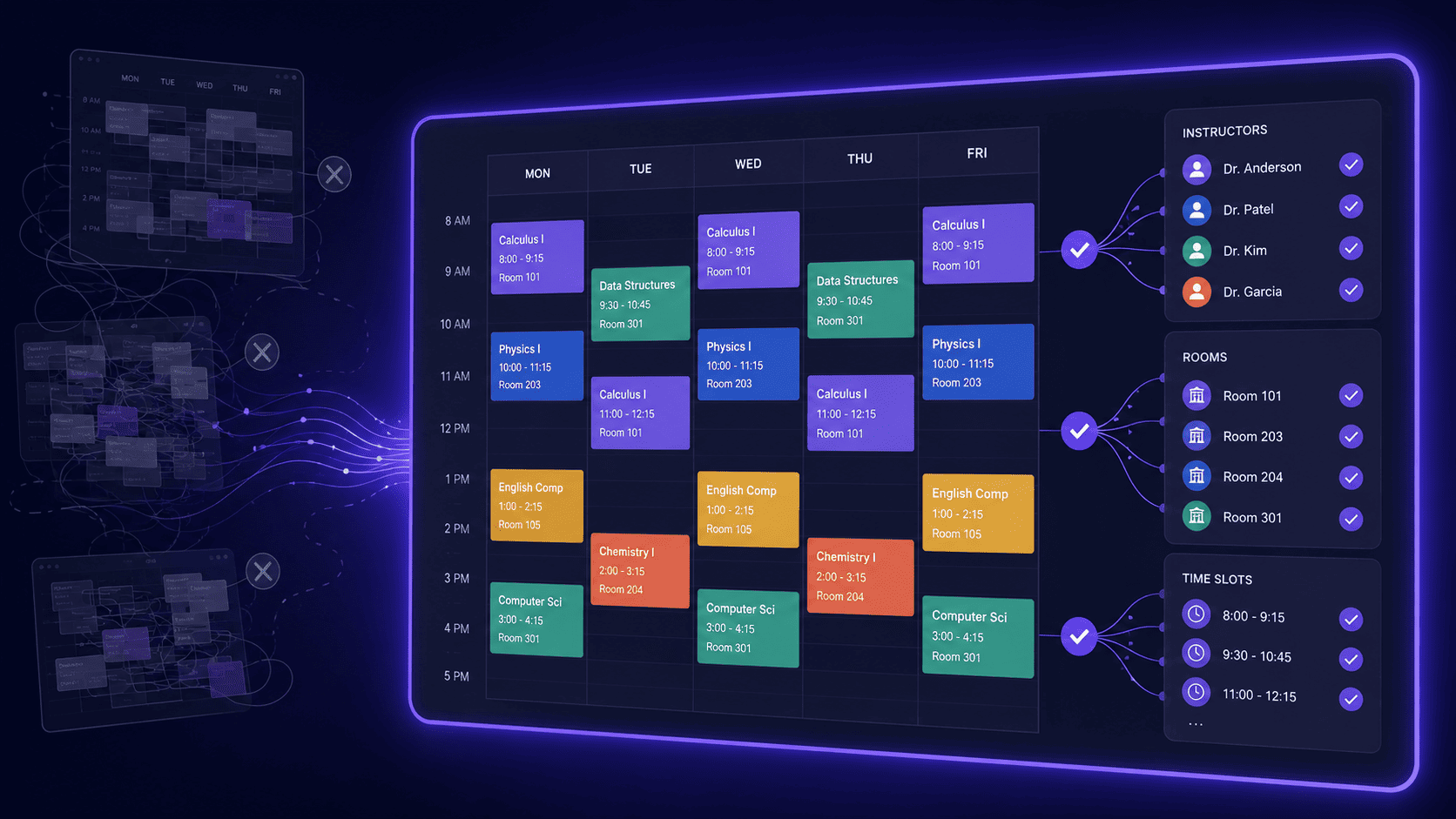
Let me be honest with you. When I set out to build Academic Scheduler, I wasn't trying to reinvent the wheel. I just needed a tool that worked the way people actually think about scheduling — simple, clear, and ready to use without a manual the size of a textbook.
What I found when I explored the market genuinely shocked me.
The Problem With Every Other Scheduling Tool
I spent weeks going through competing platforms. Not just trialing them — really digging in, reading their docs, watching their tutorials, reaching out to users. Here's exactly what I kept running into:
The worst part? These aren't obscure startups. These are established, well-funded platforms — and they still haven't solved the most basic problem: making scheduling feel easy.
So I Spent 1+ Year Building the Alternative
Academic Scheduler started as my own frustration turned into a mission. Every decision I made — every feature, every flow, every button — was shaped by one question: "Would a first-time user understand this without help?"
That's not easy. It means saying no to features that would add complexity without value. It means spending weeks on an onboarding flow that most teams skip. It means testing with real users, watching them get confused, and rebuilding until they don't.
What Makes Academic Scheduler Different
How the Trial Works
Most software buries the good stuff behind a paywall and lets you discover that after you've already spent time setting things up. We do the opposite.
| Step | What Happens | Others Do This? |
|---|---|---|
| Register | Pick your plan upfront — full transparency on what's included | Rarely |
| Onboard | Guided tour walks you through every key feature immediately | Almost never |
| 14-Day Trial | All features in your chosen plan — fully unlocked, no restrictions | Not like this |
| Decide | Subscribe if it's the right fit — after real experience, not a demo | Sometimes |
A Note From Me, the Founder
I'm Muhammad Huzaifa. I've been building Academic Scheduler for over a year — not as a side project, but as something I genuinely care about getting right. I've sat through the same bad software experiences you have. I've watched institutions waste hours on scheduling because their tools got in the way instead of helping.
This product is my answer to that problem. Every feature exists because it solves a real pain point. Every screen was designed because I asked: "What does a person actually need right now?"
I'm not a big company with a marketing budget. I'm a founder who cares deeply about this problem and is building the solution one day at a time. When you use Academic Scheduler, you're not just getting software — you're getting direct access to someone who wants your scheduling experience to be genuinely better.
"I built Academic Scheduler because I was tired of tools that treat complexity as a feature. Scheduling should be the easy part of running an academic institution. I want to make sure it is."
— Muhammad Huzaifa, Founder
Frequently Asked Questions
You choose your plan when you register, but your 14-day trial gives you full access to every feature in that plan. No unexpected charges, no locked features halfway through — you see exactly what you're getting before you commit.
Academic Scheduler is built for schools, colleges, universities, and training centers that need to manage class timetables, instructor availability, and room assignments without the chaos. If you've struggled with scheduling conflicts or complexity before, this is for you.
The onboarding tour handles the basics the moment you register. Beyond that, documentation and direct support are available. As a founder-led product, you're never more than a message away from someone who actually built the thing.
Generic calendars were built for individuals managing their own time. Academic Scheduler was built specifically for the complexity of institutional scheduling — multiple rooms, multiple instructors, recurring class patterns, semester structures, and automatic conflict resolution. It's a fundamentally different problem.